From a Workshop in 1897 to the ISRO —The Godrej Story.
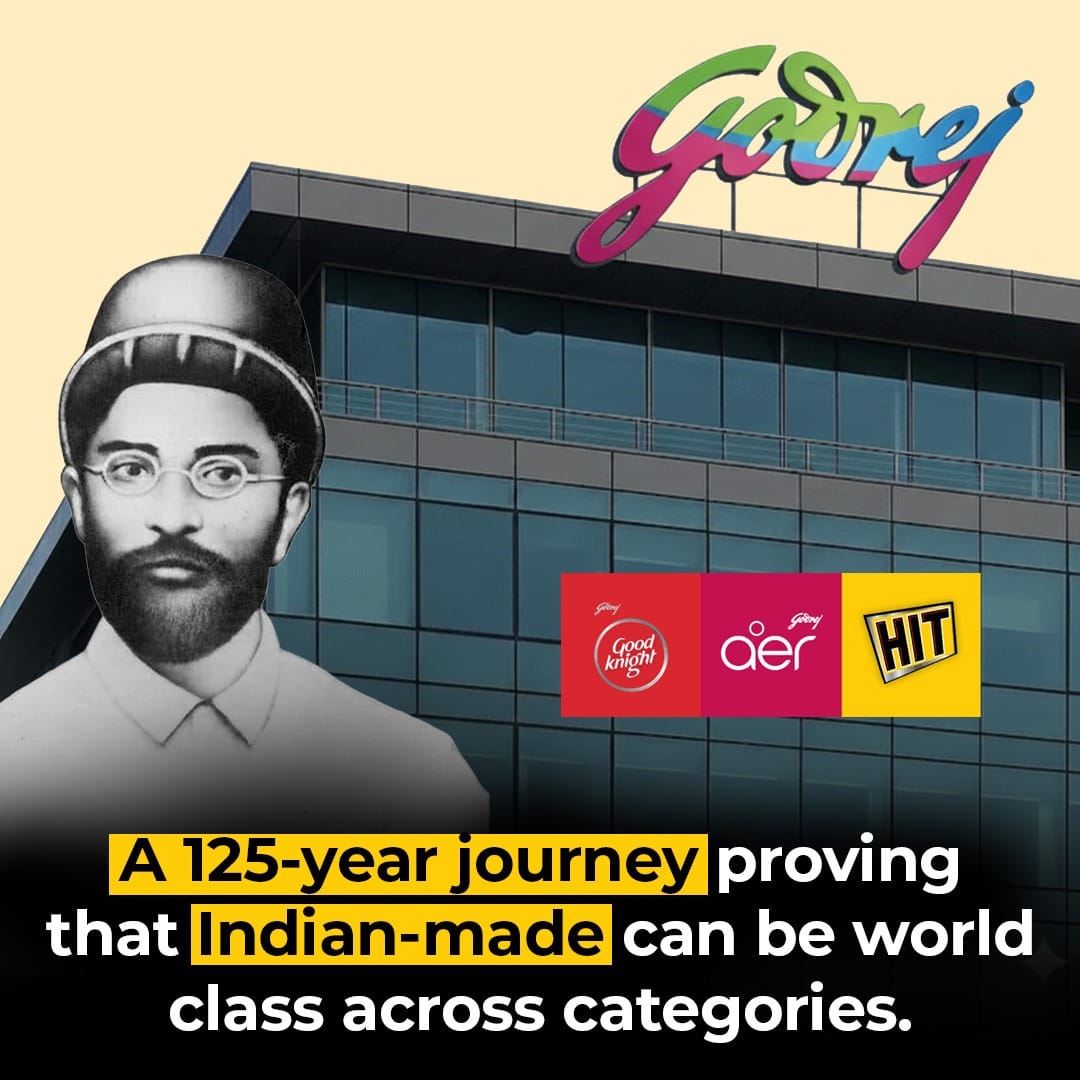
🧑⚖️In 1897, a young Parsi lawyer named Ardeshir Burjorji Godrej kept failing his way forward.
He tried law, chemistry, and even business — none worked.
But each failure taught him something new, and that persistence led him to a small Lalbaug workshop in Bombay, where he began building locks.
At that time, British-made locks ruled Indian homes, but Ardeshir believed India could build its own.
With second-hand machines and steady effort. He created the Unpickable Godrej Lock in 1900 — one that the Bombay Police, blacksmiths, and even thieves couldn’t open.
That moment marked the start of Godrej — built on skill, not size.
🔥Then came the fire that made India notice.
In 1902, when Bombay’s Opera House caught fire , everything inside was destroyed except a Godrej Safe.
Newspapers covered the story, orders poured in, and a small workshop became a trusted national name — proving that Indian-made products could truly protect what mattered.
🧼A few years later came the Swadeshi soap movement.
By 1918, imported animal-fat soaps filled Indian markets, and Ardeshir Godrej saw the need for a cleaner, Indian option.
He created Chavi, India’s first vegetable-oil Swadeshi soap, which people quickly embraced.
In 1920, Godrej No.2 Soap, endorsed by Rabindranath Tagore, took the brand from Indian lockers to Indian bathrooms.
Step by step, through clear ideas and steady effort, Godrej built trust across India — not with words, but with products that worked.
🏭From the 1920s, Godrej moved beyond locks into steel almirahs, furniture, engineering tools, daily-use products and the worker township that became Pirojshanagar.
After Ardeshir Godrej passed away in 1936
When Pirojsha carried the vision forward, Godrej learned from every step
· The 1955 typewriter taught them precision.
· The 1958 refrigerator taught them scale.
· Making ballot boxes taught them responsibility.
As India modernised, Godrej moved into 15+ categories — appliances, locks, security, chemicals, furniture, FMCG, agro and real estate.
Handling so many areas taught them one simple truth, each category needs its own direction and its own team.
Some categories grew fast — like appliances and locks because people already trusted their engineering.
Some grew slowly — like agro and chemicals, where they had to learn the market patiently.
They grew in agro by building farmer trust field by field, and in chemicals
🚀Then came the ISRO entry
In the 1970s–1980s, they quietly helped ISRO — PSLV, GSLV, Vikas engines, and later Chandrayaan–Mangalyaan parts.
Space taught them perfection.
ISRO naming them Best Supplier showed how far they had come.
🔨Then the liberalisation hit hard.
Global brands were faster and cooler.
Godrej felt old. Some categories slowed.
From this fall, they learned that trust is not enough — brands must stay young.
so they modernised appliances, rebuilt FMCG, and refreshed branding.
Godrej also changed the way it operated —from B2B machines to D2C everyday brands.
In 2013, Cinthol bringing Virat Kohli made the brand young again.
Real estate faced delays and trust issues in the 2000s, teaching them that when one part struggles, the whole group feels it — so they fixed systems, rebuilt credibility, and slowly won people back.
And in 2024, India witnessed a major moment — the Godrej family split, dividing the empire into two independent groups.
Yet the spirit stayed the same: “Two groups. One legacy."
⚙️Godrej Today
• 70+ countries
• 1.2B+ consumers
• 28,000 employees
• ₹18,970 crore turnover (FY 2024–25)
That’s how the brand that began with a small workshop in 1897…
became a partner to ISRO, a protector of Indian homes, a global FMCG player, and a name family still trust.
Not because they never fell.
But because every fall became fuel for their next rise.
💡 Built to Grow, Not Burn Insight
Across 127 years, Godrej kept growing because:
· Engineering built trust.
· Swadeshi built identity
· Aerospace built credibility.
· Diversification built scale.
· Reinvention built longevity.